Why Many Foreigners in the Czech Republic Feel Lonely After Relocation — Even If They Have Work and Housing
Many people imagine moving to the Czech Republic as the beginning of a new calm life: work, stability, safety, Europe.
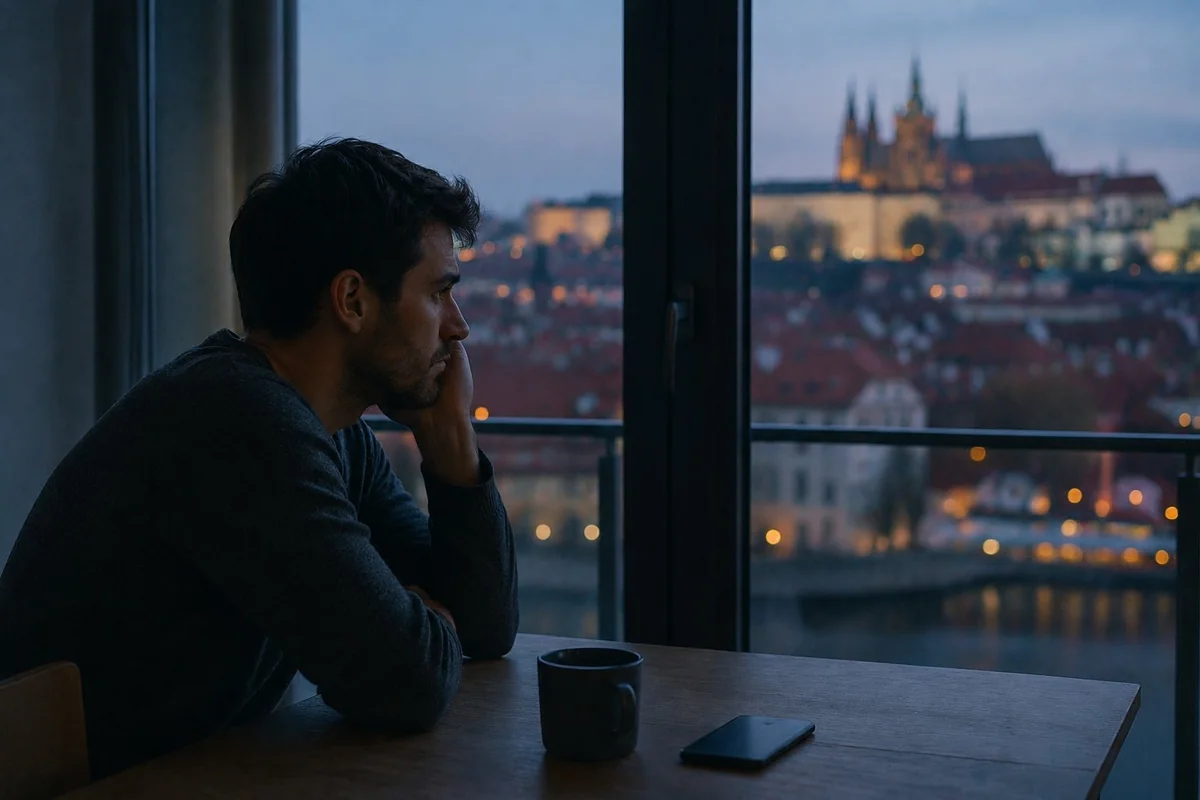
But after the first few months, many foreigners face a problem that is rarely discussed in advance — feelings of loneliness and emotional isolation.
Even if a person has work, documents, and housing, psychological adaptation can turn out to be much more difficult than expected.
Why the First Months After Relocation Are the Hardest
After relocation, most people live under constant stress.
- a new country;
- a different language;
- unfamiliar rules;
- searching for housing and work;
- documents and bureaucracy;
- absence of a familiar social circle.
Against this background, many people simply do not notice how they gradually begin to experience emotional burnout and exhaustion.
Why It Is Harder to Build Connections in the Czech Republic
Foreigners often say that Czechs are polite and calm, but at the same time rather reserved.
For many people, this becomes an unexpected reality after relocation.
- it is harder to build close friendships;
- people communicate spontaneously less often;
- communication often remains formal;
- without the language, integration becomes much slower.
Source: https://www.expats.cz/czech-news/article/why-expats-in-czechia-struggle-with-loneliness
How Language Affects Quality of Life
Many foreigners spend years living in the Czech Republic only within Russian-speaking or Ukrainian-speaking communities.
But without the language, people gradually begin to feel limitations in almost every area of life:
- it becomes harder to find a good job;
- renting housing becomes more difficult;
- communication with doctors and government offices becomes harder;
- a constant feeling of being an outsider appears.
Even basic conversational Czech greatly simplifies adaptation.
Why Prague and Smaller Cities Feel Different
In Prague, foreigners usually have an easier start:
- more international environment;
- English is understood more often;
- many foreigners;
- it is easier to find a community.
At the same time, life in the capital often feels faster, more expensive, and emotionally colder.
In smaller cities, adaptation may be harder because of the language barrier, but people often begin to feel part of local life more quickly.
Why Work Affects Psychological Well-Being
Work after relocation is not only about money.
Most often, work:
- creates a social circle;
- helps people adapt faster;
- provides a sense of stability;
- helps improve language skills;
- reduces stress after relocation.
But if the work is difficult, unofficial, or connected with questionable intermediaries, adaptation becomes much more complicated.
What Helps People Feel Comfortable Faster
According to Czech integration centers, the fastest adaptation happens among people who:
- start learning the language immediately after relocation;
- work officially;
- do not isolate themselves only within their diaspora;
- try to participate in local life;
- prepare psychologically for relocation in advance.
Source: https://www.integracnicentra.cz/
Why More and More Foreigners Choose Stability Instead of “Fast Money”
While previously many people came to the Czech Republic for any possible income, in 2026 more and more people begin to value:
- official employment;
- normal working schedules;
- stable housing;
- health insurance;
- a calm life without constant stress.
That is why the quality of the employer now plays a huge role in the adaptation of foreigners.
How praga.work Helps After Relocation
On praga.work, employers often immediately specify:
- conditions for foreigners;
- housing assistance;
- official employment;
- language requirements;
- direct contact without intermediaries.
This helps people understand the real living conditions after relocation in advance and avoid many problems.
Conclusion
Life in the Czech Republic for foreigners is not only about work and documents, but also about psychological adaptation to a new country.
That is why language, stable work, stability, and a healthy social environment become key factors for a comfortable life after relocation.