Transport in the Czech Republic in 2026: How Much Travel Costs, How to Travel Cheaper, and Why Many Foreigners Give Up Owning a Car
The Czech Republic is considered one of the most convenient countries in Europe in terms of transportation. Even without a car, it is possible to comfortably live, work, and travel between cities.
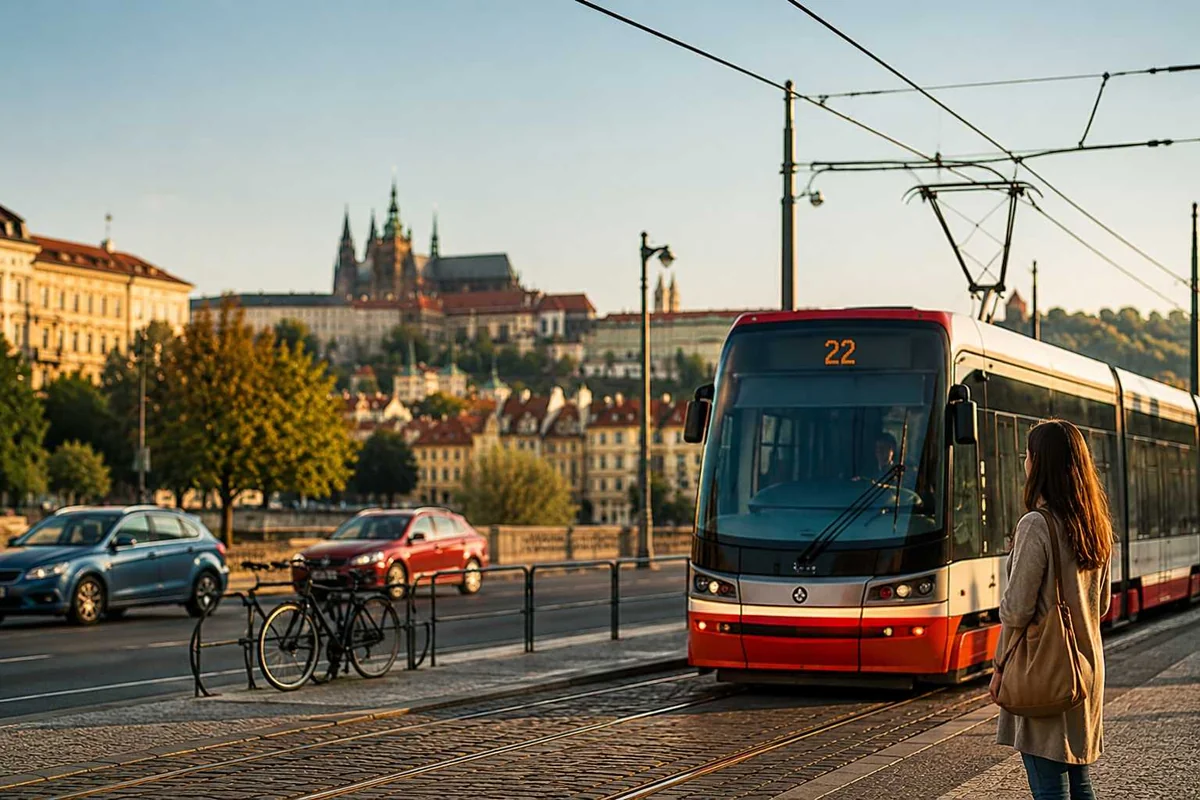
This is especially noticeable in Prague, where the metro, trams, and buses operate almost around the clock, and most routes run exactly according to schedule.
That is why many foreigners quickly realize after relocating that owning a personal car in the Czech Republic often becomes not a necessity, but an additional expense.
Why Public Transport in the Czech Republic Is Considered One of the Best in Europe
The main advantage of Czech public transport is its convenient unified system.
In Prague, one ticket allows transfers between:
- the metro;
- trams;
- buses;
- part of the suburban train network.
Public transport operates on precise minute-based schedules, and intervals in the city center are often only a few minutes.
Source: https://piholding.cz/about-cz/transport-v-chehii/
How Much Public Transport Costs in Prague in 2026
In 2026, transportation in Prague remains relatively affordable by European standards, although prices continue to rise gradually.
- 30 minutes — around 30 CZK;
- 90 minutes — around 40 CZK;
- 24 hours — around 120 CZK;
- 72 hours — around 330 CZK.
For people living in the Czech Republic permanently, it is much more выгодно to buy long-term transport passes.
Source: https://expresstour.cz/statja-transport-v-Prage-i-Chekhii
Why Foreigners Often Choose Public Transport Instead of a Car
After relocating, many people plan to buy a car, but over time they abandon this idea.
The main reasons are:
- expensive parking in Prague;
- high garage rental prices;
- traffic jams in the city center;
- insurance and maintenance costs;
- well-developed public transportation.
In many areas of Prague, getting somewhere by metro or tram is faster than driving a car.
How to Travel Around the Czech Republic More Cheaply
For intercity travel, foreigners most often use:
- trains;
- long-distance buses;
- regional rail connections.
The Czech Republic has a very dense railway network, so even smaller cities are usually well connected by transport.
The most popular routes include:
- Prague — Brno;
- Prague — Plzeň;
- Prague — Ostrava;
- Prague — Karlovy Vary.
Many tickets are cheaper when purchased in advance through carrier apps and online services.
What Foreigners Should Know After Relocating
After arriving in the Czech Republic, many people encounter several unexpected things:
- fines for traveling without a valid ticket are quite high;
- ticket inspectors often work without uniforms;
- tickets must be activated before travel;
- different cities use different transport systems.
In Prague, electronic tickets and the PID Lítačka app are becoming increasingly common.
Source: https://pragagid.ru/gorodskoj-transport-pragi-2262
Why Transport Affects Quality of Life in the Czech Republic
After relocating, many foreigners start choosing housing specifically near metro or tram lines.
This helps:
- save time;
- spend less money on a car;
- reach work faster;
- live farther away from Prague’s expensive city center.
In many cases, good transport connections turn out to be more important than the district itself.
How praga.work Helps Foreigners After Relocation
On praga.work, employers often specify:
- the city of work;
- the district where the job is located;
- whether housing nearby is available;
- transport convenience;
- relocation conditions for foreigners.
This helps people understand in advance how convenient commuting will be and what expenses to expect after moving.
Conclusion
Transport in the Czech Republic remains one of the country’s biggest advantages for foreigners. Even without a car, it is possible to comfortably live, work, and travel here.
The most important thing is to understand the transport system in advance, use transport passes, and choose housing with convenient access to work.