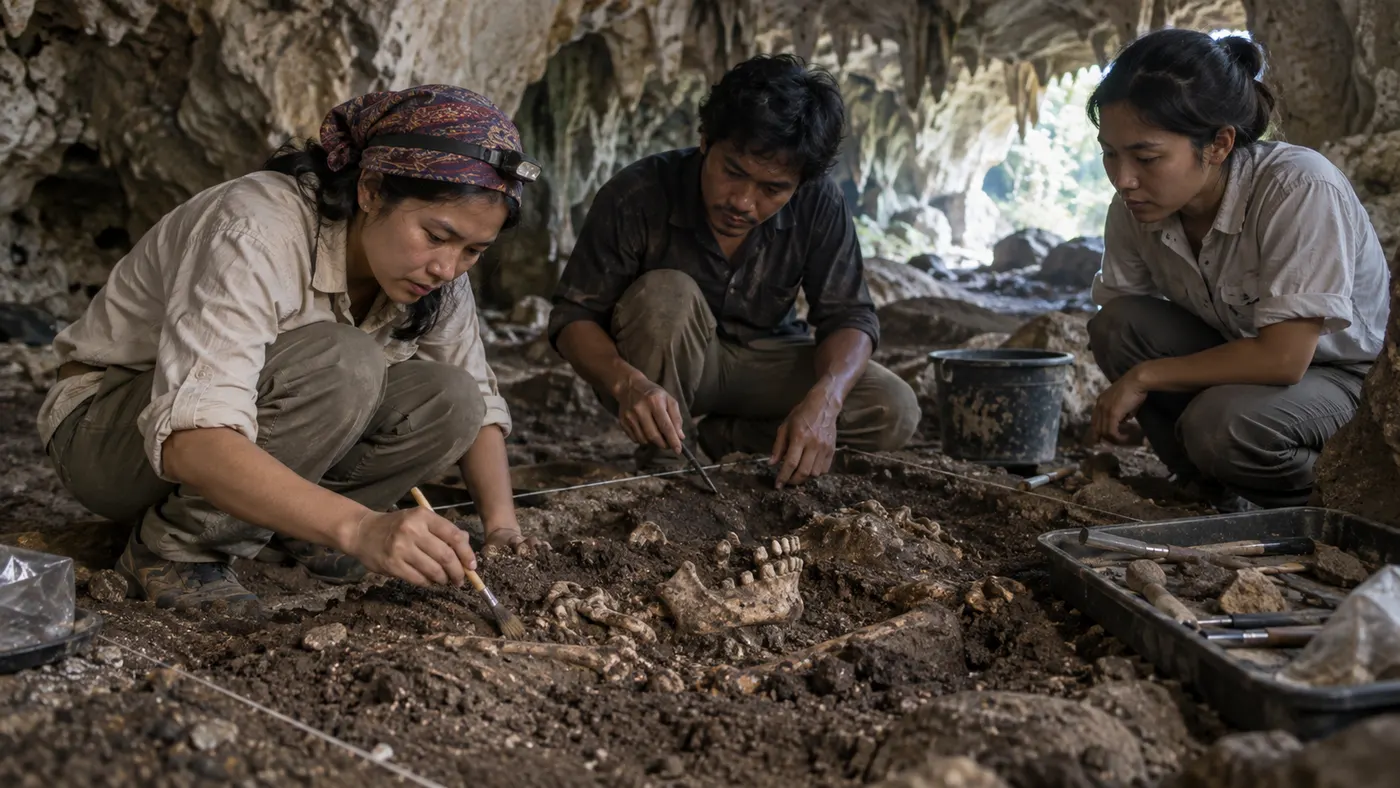
Teeth up to 25,000 years old reveal traces of psychoactive substance in possible earliest evidence of plant drug use
Archaeologists in Indonesia have found evidence suggesting that humans were regularly using psychoactive plants tens of thousands of years ago. Analysis of ancient human remains from Sulawesi revealed distinctive tooth damage and traces of arecoline, the active compound found in areca nut.
The oldest remains examined date to roughly 25,000 to 16,000 years ago. According to Griffith University, the discovery may represent the earliest known evidence of habitual human use of a psychoactive plant substance.
Why prehistoric people may have used areca nuts
Researchers believe hunter-gatherers may have kept whole areca nuts in their mouths and sucked them over extended periods. Laboratory experiments showed that contact with saliva can release enough arecoline to produce physiological effects.
One possible reason for the practice was pain relief, including relief from toothache. However, repeatedly holding the hard nuts against the teeth also caused damage, leaving distinctive grooves on some of the ancient remains.
The research was published in Science Advances. The findings suggest that humanity’s relationship with psychoactive plants may extend much further into prehistory than previous archaeological evidence had demonstrated.