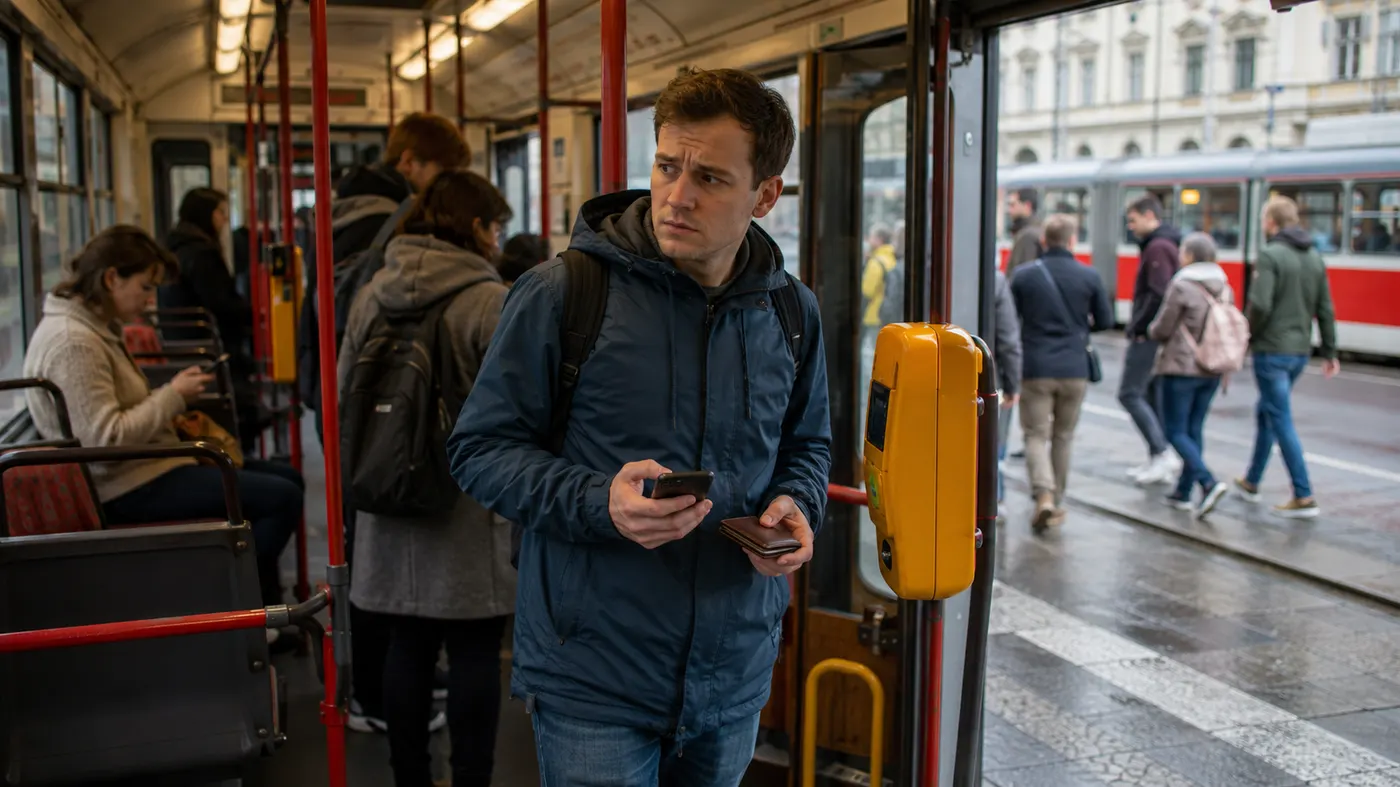
Public Transport in Prague: Tickets, Passes, PID Lítačka, and Common Mistakes Newcomers Make
Public transport in Prague is one of the main advantages of living in the city. It is completely possible to live here without a car: the metro, trams, buses, suburban trains, and night routes cover most everyday trips. But for newcomers, the system may not be obvious at first: you need to understand tickets, passes, zones, the PID Lítačka app, ticket inspections, and activation rules.
The main mistake after moving is thinking that in Prague you can simply get on public transport and figure things out on the way. In practice, the ticket must already be valid during the trip. If a paper ticket has not been validated, an electronic ticket has not been activated, or a pass is not linked to the correct identifier, an inspector may consider the trip unpaid.
That is why it is better to understand public transport in Prague in advance. It helps save money, avoid fines, choose the right ticket, and travel calmly to work, school, the doctor, the train station, or another district of the city.
How public transport in Prague works
Public transport in Prague is part of the PID system — Pražská integrovaná doprava, meaning Prague Integrated Transport. It is a unified system that includes the metro, trams, buses, some suburban trains, the funicular, and transport in Prague and the Central Bohemian Region.
For everyday life, this is convenient: you often do not need to buy a separate ticket for each type of transport. One ticket can be valid by time and allow transfers, as long as the trip is within the paid zones and validity period.
In Prague, people most often use:
- the metro;
- trams;
- city buses;
- night trams and buses;
- suburban trains within PID;
- the funicular, if the ticket or pass meets the fare conditions.
A newcomer should remember this: a ticket in Prague is usually not “for one ride”, but for a certain period of time. During that time, transfers are allowed if the ticket is valid and covers the required route.
Public transport tickets in Prague in 2026
From 1 January 2026, a new PID tariff applies in Prague. Current prices are published on the official page PID — Tickets and fare.
For an adult passenger in Prague, the main short-term tickets are:
- 30 minutes — 36 Kč in the PID Lítačka app or 39 Kč in paper form;
- 90 minutes — 46 Kč in the PID Lítačka app or 50 Kč in paper form;
- 24 hours — 140 Kč in the app or 150 Kč in paper form;
- 72 hours — 340 Kč in the app or 350 Kč in paper form.
These are the basic prices for regular adult passengers. Some categories may be entitled to discounts or free travel, but the right to a discount must be proven with a document. You cannot simply buy a discounted ticket without being eligible and hope that the inspector will not ask for confirmation.
30 minutes or 90 minutes: which ticket to choose in Prague
One of the common mistakes newcomers make is buying a ticket that is too short. A 30-minute ticket is suitable for a short trip without long transfers. But if the route includes the metro, a bus, a tram, waiting, and walking between stops, 30 minutes may not be enough.
A 30-minute ticket is usually suitable if:
- the trip is short;
- the route is familiar;
- there are no long transfers;
- transport runs frequently;
- there is no risk of delay.
A 90-minute ticket is better if:
- the route is long;
- you need to travel through several districts;
- there are transfers;
- you are travelling with luggage;
- you do not know the city well yet;
- there is a risk of transport delays;
- you need to go somewhere unfamiliar.
The price difference between 30 and 90 minutes is small, while the fine for an expired or incorrect ticket is much more unpleasant. So during the first weeks after moving, it is better not to save a few crowns if the route is unclear.
PID Lítačka: the app for tickets and passes in Prague
PID Lítačka is the main app for public transport in Prague and the Central Bohemian Region. Through it, you can buy tickets, plan routes, check connections, see current restrictions, and buy long-term passes.
The official app page explains that the PID Lítačka mobile app allows you to keep tickets in your account, and if you lose your device, you can log in to your account on a new phone and keep access to purchased tickets.
With PID Lítačka, it is convenient to:
- buy short-term tickets;
- activate a ticket before a trip;
- search for routes around Prague;
- check current transport changes;
- buy long-term passes;
- store tickets in an account;
- avoid looking for a paper ticket in a machine or kiosk.
But it is important to remember: buying a ticket in the app is not enough. It must be activated correctly before the trip. If the ticket is bought but not activated, it will not be considered valid during an inspection.
How to activate a ticket in PID Lítačka
An electronic ticket in the app must be activated before entering public transport or before the trip begins. You cannot wait for an inspector and activate the ticket only after they have entered the carriage or bus.
A newcomer should follow a simple rule:
- buy the ticket in advance;
- check which ticket is needed for the route;
- activate the ticket before boarding;
- wait until the ticket becomes valid;
- do not close the app if there may be an inspection;
- watch the ticket validity time.
If the phone runs out of battery, the internet does not work, or the app will not open, this can become a problem during an inspection. For important trips, it is better to have extra time, a charged phone, and a clear route.
Paper tickets in Prague: when they become valid
A paper ticket in Prague must be validated. Buying a paper ticket does not by itself mean that it is valid. The ticket becomes valid after being stamped in a validator, if the rules for that specific ticket require validation.
A common newcomer mistake is buying a paper ticket, putting it in a pocket, and travelling. During an inspection, such a ticket may be considered invalid because it was not activated.
With a paper ticket, you need to check:
- how long the ticket is valid for;
- where it needs to be validated;
- whether the time was printed correctly;
- whether the ticket covers the entire route;
- whether the validity period will end before the trip is over.
If you are not sure how a paper ticket works, it is easier to use the PID Lítačka app. But in the app, the ticket must also be activated correctly.
Transport pass in Prague: when a long-term pass is more cost-effective
A transport pass in Prague is useful for those who travel regularly: to work, school, the doctor, shops, errands, and back. If you buy single tickets every day, expenses grow quickly.
The PID Lítačka — Pricing website lists prices for long-term passes. For example, transferable long-term coupons are more expensive, but they are not linked to one specific person. For an ordinary resident, a personal pass linked to an account, card, or another identifier is usually more relevant.
A pass is worth considering if:
- you travel almost every day;
- work is not close to your housing;
- you need to make transfers;
- you often travel around the city for errands;
- you do not want to buy a ticket every time;
- you want a calm option without constantly watching the time.
Before buying a pass, you need to check the zones, validity period, type of pass, and the identifier it is linked to. A linking mistake can cause problems during an inspection.
Monthly, quarterly, or yearly pass in Prague
The choice of pass depends on how long a person plans to live and travel in Prague. If you have just arrived and do not yet know where you will work and live in a month, you can start with a shorter period. If your housing and work are stable, a long-term pass is usually more convenient.
A monthly pass is suitable if:
- you have just moved;
- you are still looking for permanent housing;
- you do not know how often you will travel;
- your work or schedule may change.
A quarterly or yearly pass may be more convenient if:
- you live in Prague permanently;
- you travel to work every day;
- you use public transport often;
- you want to reduce the average cost of trips;
- you do not want to renew the pass every month.
Before paying, it is better to check current prices and conditions on the official Lítačka website, because fares and rules may change.
Public transport zones in Prague and the Central Bohemian Region
Within Prague, most everyday trips are covered by regular Prague tickets. But if the route goes beyond the city, zones become important. This matters for people who live in the suburbs, work outside the city, or travel to the Central Bohemian Region.
A newcomer mistake is thinking that a Prague ticket automatically works for any trip near the city. If the route goes beyond the paid zones, the ticket may be wrong.
Zones should be checked if:
- you live outside Prague;
- work is in a suburban area;
- you are taking a bus outside the city;
- you use a suburban train;
- the route passes through several zones;
- you are buying a long-term pass for Prague and the surrounding region.
For such trips, it is better to use the PID planner or IDOS and carefully check which ticket the system recommends.
Can you transfer with one ticket?
Yes, in Prague you can transfer with one ticket if the ticket is valid by time and covers the required route. This is one of the main advantages of the PID system.
For example, if the ticket is valid for 90 minutes, you can take the metro, then transfer to a tram, and then to a bus — as long as the ticket validity has not expired and the route is within the required zones.
But there are important conditions:
- the ticket must be valid;
- the validity time must not have expired;
- the route must be within the paid zones;
- the electronic ticket must be activated;
- the paper ticket must be validated;
- a discounted ticket must be supported by a document.
If the trip is long and includes transfers, it is better to choose a 90-minute ticket or a pass rather than risk travelling with a short ticket.
Fines in Prague public transport
Inspectors in Prague may check tickets in the metro, trams, buses, and other parts of PID. An inspection can happen at any moment, so the ticket must be valid for the entire trip.
The official DPP page about fines explains that a passenger must have a valid ticket, and a fine can be paid on the spot, at an additional fare ticket office, through the e-shop, or by bank transfer. More details: DPP — Penalties and transport inspectors.
A fine is often caused not by bad intentions, but by a mistake:
- the ticket was bought but not activated;
- the paper ticket was not validated;
- the ticket validity time expired;
- the ticket was bought for the wrong zones;
- a discounted ticket was used without proof of discount eligibility;
- the pass was linked to the wrong identifier;
- the phone ran out of battery and the ticket cannot be shown;
- the person boarded before activating the electronic ticket.
If an inspector asks for a ticket, you should calmly show a valid ticket, pass, or discount document. Arguing without understanding the rules usually does not help.
Common mistakes newcomers make in Prague transport
Most mistakes newcomers make in Prague public transport are repeated again and again. They are easy to avoid if you know the rules in advance.
- buying a ticket but forgetting to activate it;
- not validating a paper ticket;
- choosing 30 minutes for a long trip;
- not accounting for transfers;
- travelling outside Prague without checking zones;
- buying a discounted ticket without being entitled to the discount;
- thinking that a ticket is needed only in the metro, but not in a tram or bus;
- not checking night transport after a late shift;
- not keeping the phone charged when using an electronic ticket;
- buying a pass but not checking its linked identifier.
The most common mistake is treating a purchased ticket and a valid ticket as the same thing. In Prague, these are different: the ticket must be activated and valid at the exact moment of travel.
Public transport in Prague at night
Night transport in Prague is important for those who work shifts, return home late, or live far from the centre. At night, the metro does not operate the same way as during the day, and night trams and buses play the main role.
Before agreeing to a late shift, you should check:
- how to get home after work;
- whether a night tram or bus runs;
- how long the transfer wait is;
- whether there is a safe route from the stop to home;
- how much a taxi will cost if public transport is not suitable;
- whether transport operates on weekends and holidays.
For daytime work, transport in Prague is usually convenient. But for night shifts, the route needs to be checked separately, otherwise the job may turn out to be inconvenient even with a normal salary.
How to get from Prague Airport by public transport
Prague Airport is connected to the city by buses. Newcomers often make mistakes at the airport: they buy the wrong ticket, do not activate it, or do not account for luggage and the transfer to the metro.
Before travelling from the airport, you need to check:
- which bus goes to the required metro station;
- whether the ticket validity time is enough;
- whether luggage needs a ticket under current rules;
- where to buy or activate the ticket;
- which final station is more convenient for your district;
- whether it is easier to buy a 90-minute ticket if the route is unfamiliar.
If a person has just arrived in the Czech Republic, it is better not to save money on the shortest ticket. In the first hours after moving, it is more important to reach your housing calmly.
Transport pass for commuting to work in Prague
If a person lives in Prague and travels to work every day, a pass often becomes the most convenient option. It reduces the risk of forgetting a ticket, making a mistake with time, or buying a single ticket every day.
A pass is especially useful if:
- work is far from housing;
- transfers are needed;
- shifts start at different times;
- you travel not only to work, but also around the city for errands;
- you often use the metro, trams, and buses;
- you want to think less about each individual ticket.
But the pass must be set up correctly. You need to check its validity period, zone, identifier, and what it is linked to: a Lítačka card, bank card, app, or another carrier.
How to check a route around Prague
To check a route, it is better to use official apps and services. PID Lítačka helps plan trips around Prague and the Central Bohemian Region and also recommends a suitable ticket.
Before travelling to an unfamiliar district, it is worth checking:
- how long the trip will take;
- how many transfers there will be;
- which ticket is needed;
- whether there are restrictions or repairs;
- when the last connection leaves;
- how to get back;
- which route is safer at night.
This is especially important when looking for housing. An apartment may look good, but if you need to commute to work every day with three transfers, within a month it can become a serious problem.
What should a newcomer choose: tickets or a pass?
If a person has come to Prague for a few days, short-term tickets are more convenient: 30 minutes, 90 minutes, 24 hours, or 72 hours. If a person has moved to live in Prague and travels every day, it is better to consider a long-term pass.
Short-term tickets are suitable if:
- you are in Prague temporarily;
- you travel rarely;
- you do not yet know your regular route;
- you use public transport only sometimes.
A pass is suitable if:
- you live in Prague permanently;
- you travel to work or school every day;
- you often make transfers;
- you do not want to watch the ticket time every time;
- you plan to stay in the city for more than one month.
For the first month after moving, you can start with a monthly pass or calculate expenses based on actual trips. If trips are daily, a pass usually quickly becomes more convenient.
What to remember about tickets in Prague
To avoid mistakes in Prague public transport, it is enough to remember a few rules.
- the ticket must be valid before the trip starts;
- an electronic ticket must be activated;
- a paper ticket must be validated;
- the ticket is valid by time, not only for one vehicle;
- transfers are possible if the ticket is still valid;
- outside Prague, zones must be checked;
- a discounted ticket requires proof of eligibility;
- a pass must be linked to the correct identifier;
- the phone with the electronic ticket must be charged;
- when in doubt, it is better to buy a ticket for a longer time.
Conclusion
Public transport in Prague is convenient, fast, and often allows people to live without a car. But newcomers need to understand tickets, passes, PID Lítačka, zones, and ticket inspections.
The main rule is simple: a ticket must not only be bought, but valid at the moment of travel. An electronic ticket must be activated, a paper ticket must be validated, and a pass must be properly set up and linked.
If you travel every day, it is worth considering a long-term pass. If trips are rare or temporary, short-term tickets are enough. During the first weeks after moving, it is better to check routes in advance, avoid saving money on a ticket that is too short, and use official PID services. Then transport in Prague becomes not a source of fines and stress, but one of the main advantages of life in the city.