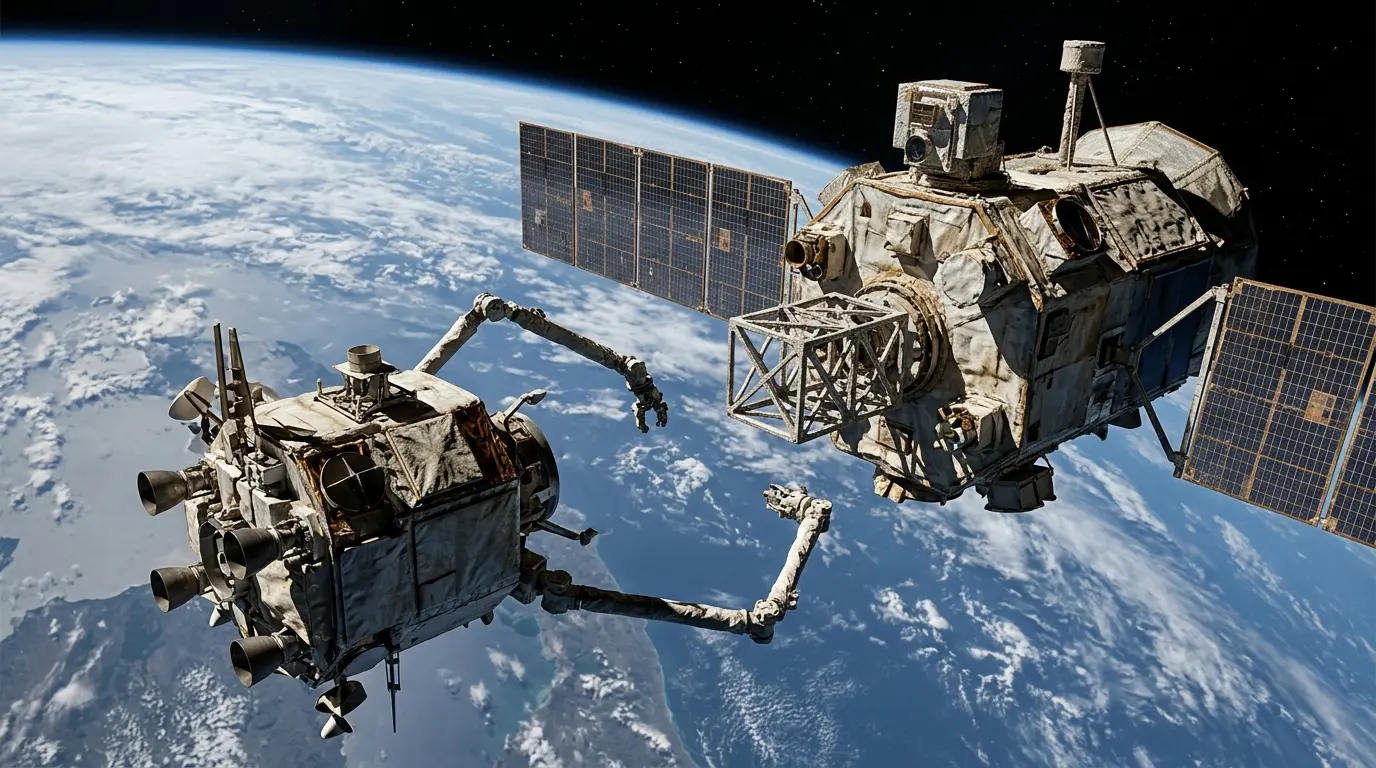
NASA says Swift Boost Mission provided lessons for future satellite servicing
NASA said on September 28, 2026 that its commercial mission to raise the orbit of the Neil Gehrels Swift Observatory ended without changing the telescope’s orbit, but provided experience for future in-space servicing missions.
The mission was carried out with Katalyst Space, which developed the LINK robotic servicing spacecraft. NASA awarded the company the contract in September 2025, giving the team about one year to design, build, test and launch the spacecraft.
Why the mission was attempted
Swift has operated in low Earth orbit for more than 20 years. Increased solar activity accelerated the spacecraft’s orbital decay, creating a risk that the observatory would re-enter the atmosphere by the end of 2026 without intervention.
LINK launched from Kwajalein Atoll in the Marshall Islands in July aboard a Northrop Grumman Pegasus XL rocket. After reaching orbit, the servicing spacecraft experienced intermittent communication losses and problems with its orientation control.
What NASA learned
NASA and Katalyst eventually scaled back the mission after troubleshooting the spacecraft. The planned operation to capture and raise Swift’s orbit was not completed.
NASA said the project nevertheless tested new approaches to commercial spacecraft servicing, including rapid development, mission planning and satellite operations designed to extend the useful life of spacecraft in low Earth orbit.