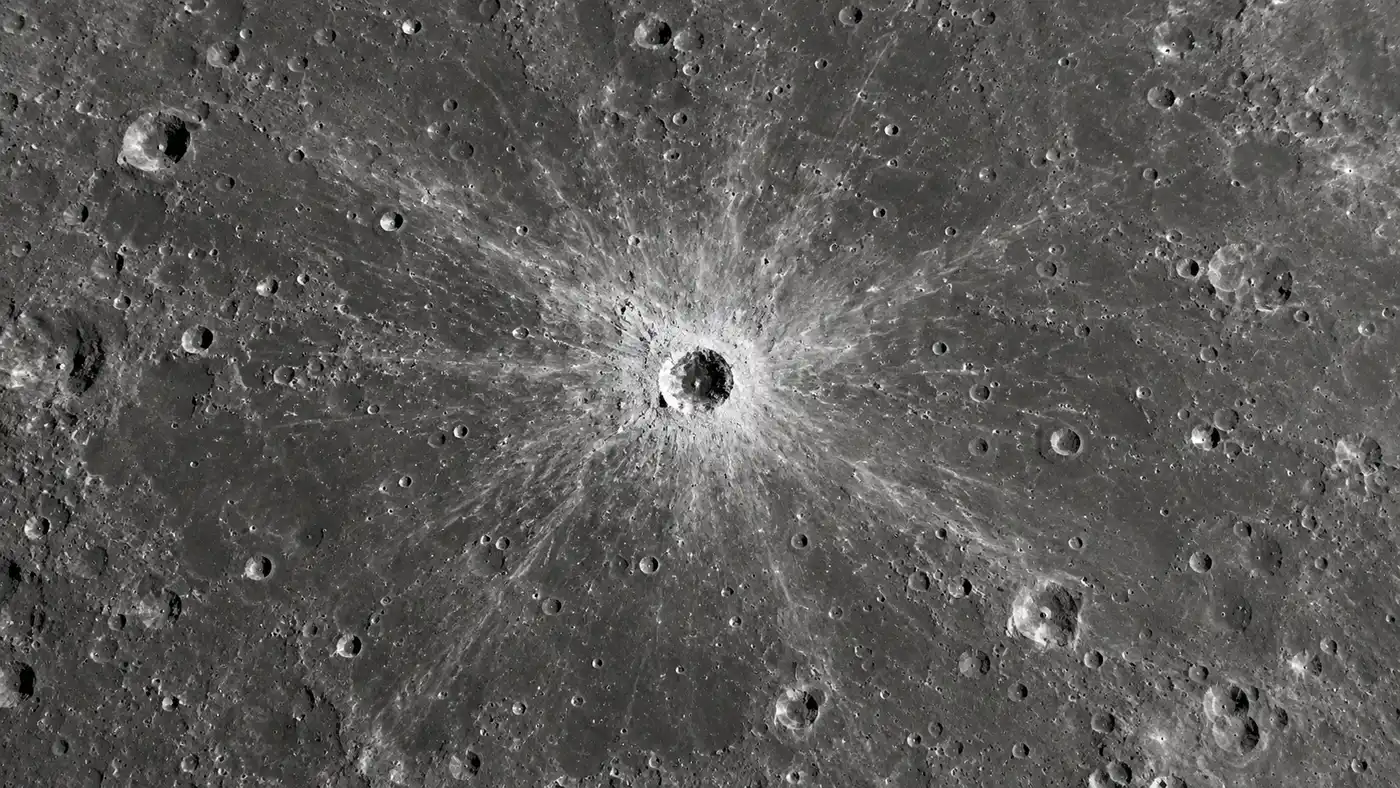
NASA Finds a New 222-Meter Crater on the Moon From a Rare Recent Impact
NASA scientists have discovered an enormous new crater on the Moon created by an impact that occurred only about two years ago. The McGetchin crater is approximately 222 meters wide and 43 meters deep, making it the largest newly formed crater yet identified anywhere in the solar system.
The impact itself happened between April 11 and May 22, 2024, but researchers found the site later by comparing images collected by NASA's Lunar Reconnaissance Orbiter.
A rock several stories tall hit the Moon
According to NASA, the object that created McGetchin may have been an asteroid or comet fragment roughly the size of a three- to six-story building.
The collision produced a crater 728 feet, or about 222 meters, across and 141 feet, or roughly 43 meters, deep. Scientists estimate that an impact of this magnitude occurs on the Moon only about once a century or less frequently.
The impact changed an area far beyond the crater
NASA's Diviner instrument detected an unusual “cold spot” extending about four miles around the impact site. At night, this area is approximately 16°F cooler than the surrounding lunar surface.
Researchers say the impact loosened and disturbed the lunar regolith, making it less dense and less capable of retaining heat. This shows that a large collision can alter the physical properties of the surface well beyond the crater itself.
The discovery matters for future Moon missions
The Lunar Reconnaissance Orbiter has identified at least 1,000 new impact craters during more than 17 years of observations, but most are much smaller than McGetchin.
Understanding how frequently large impacts occur and how far they disturb lunar soil could become increasingly important as spacecraft, rovers and eventually long-term infrastructure spend more time on the Moon. The findings were reported in studies published in Science Advances.