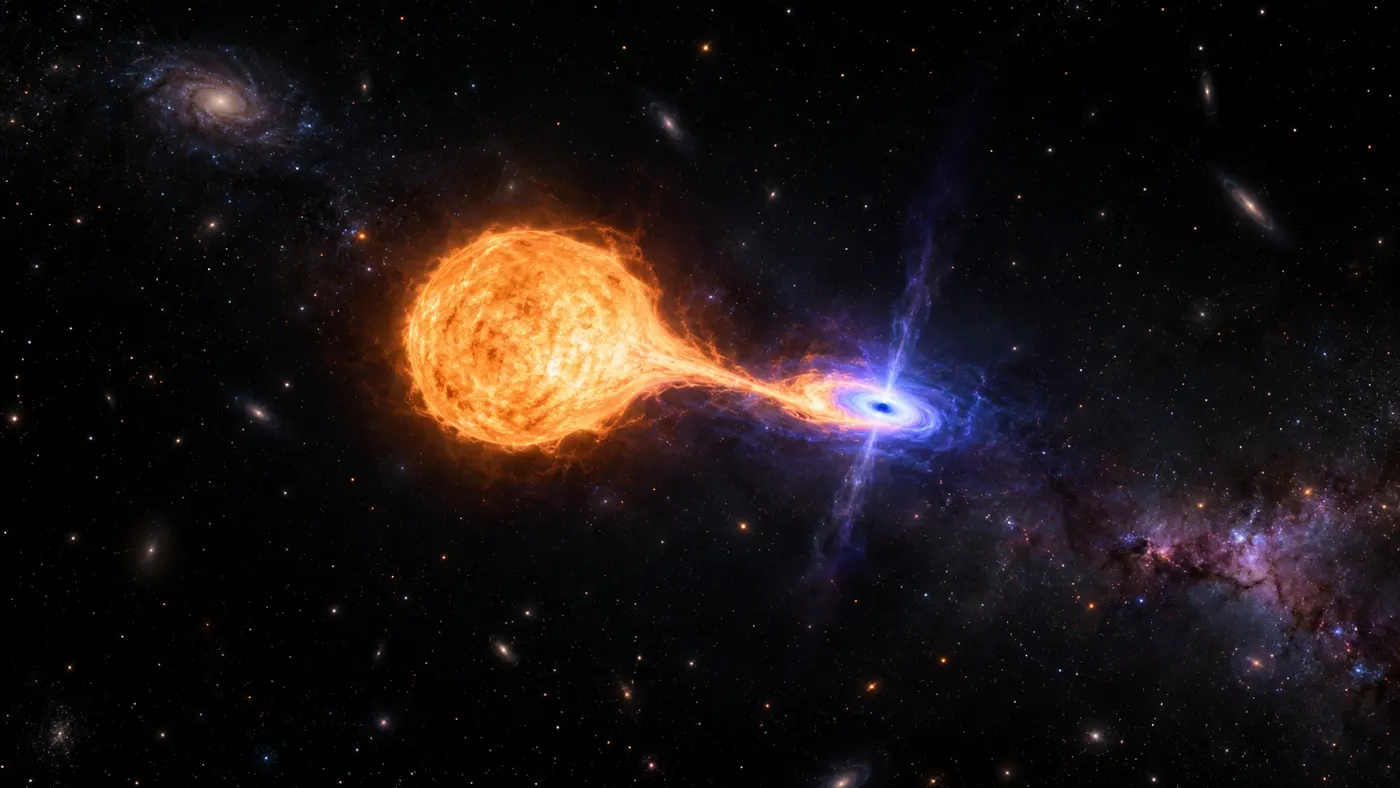
NASA finds 84 unusual X-ray objects that may represent a new class of cosmic systems
Astronomers have identified 84 unusual cosmic objects that may belong to a previously unknown class of compact binary systems. The objects were discovered by analyzing observations from NASA’s Chandra X-ray Observatory across six nearby galaxies.
The newly identified objects have been described as “hypersoft” X-ray sources. They show an unusual combination of weak high-energy X-ray emission and powerful ultraviolet radiation, distinguishing them from many known systems containing white dwarfs, neutron stars or black holes.
Why the discovery matters
Researchers believe these systems may contain a compact object pulling material from a companion star. However, the process appears to behave differently from what astronomers typically observe in known X-ray binary systems.
Similar objects could also exist within the Milky Way, but detecting them may be difficult because interstellar gas and dust can absorb much of the ultraviolet radiation that helps reveal their presence.
The discovery could provide new clues about the evolution of binary star systems. Scientists are also investigating whether these objects could play a role in ionizing interstellar gas and whether some may be connected to processes that eventually produce Type Ia supernova explosions.