How to Adapt in the Czech Republic After Moving: Language, Daily Life, and the First Months Without Unnecessary Stress
Adapting in the Czech Republic after moving rarely happens in just a few days. Even if a job has already been found, housing has been rented, documents have been submitted, and the city seems calm and understandable, real life begins later — when the first emotional excitement fades and ordinary everyday questions appear.
You need to understand how to get to work, where to buy groceries, how to speak with the apartment owner, what to do if you get sick, how to make a doctor’s appointment, where to handle documents, and why even simple situations can sometimes become more difficult without the Czech language.
The main thing is not to expect everything to feel familiar immediately. The first months after moving usually require patience, attention, and a calm approach. The better a person understands local rules, the language, and everyday logic, the faster the Czech Republic stops feeling foreign.
Why the first months after moving are the hardest
At the beginning, almost everything has to be done for the first time. Even simple actions require more effort: buying a ticket, opening an account, finding the right office, understanding a letter, calling about an advertisement, or explaining a problem at work or at a clinic.
The difficulty is not always in the Czech Republic itself. Stress often appears because a person is solving too many tasks at the same time:
- looking for or changing housing;
- figuring out work;
- handling documents;
- getting used to transport;
- calculating expenses;
- trying to understand the language;
- learning to live without familiar support nearby.
That is why the first months are better seen as a transition period. During this time, it is not necessary to do everything perfectly. What matters is gradually putting the basics in order: housing, work, documents, money, mobile service, transport, and health.
Czech is needed not only for work
Many people start learning Czech only when they need it for work. But in real life, the language is needed much more broadly. It helps you avoid depending on random translators, getting lost in letters, and feeling helpless in ordinary situations.
Czech is especially useful when you need to:
- read a rental contract;
- understand work conditions;
- communicate with a doctor;
- call about an advertisement;
- ask for directions;
- resolve an issue at a bank;
- understand a letter from an institution;
- speak with a teacher, apartment owner, or manager.
Even a basic level greatly reduces anxiety. You do not need to speak perfectly right away. At the beginning, it is enough to understand simple phrases, know how to greet people, ask a question, ask someone to repeat something, and explain that you did not understand everything.
What to learn first
The most common mistake is starting with long grammar rules and quickly getting tired. For life after moving, it is more useful to first learn words and phrases that are actually needed every day.
First of all, it is worth learning topics such as:
- greetings and polite phrases;
- numbers, dates, and time;
- address, city, street, floor;
- work and schedule;
- rent and utility payments;
- shops and groceries;
- transport and tickets;
- doctor, pain, medicine;
- documents and making appointments;
- simple questions and answers.
This approach brings results faster. A person begins to understand signs, messages, short announcements, colleagues’ phrases, and simple instructions. At the start, this is much more useful than trying to speak in complex sentences immediately.
Why daily life affects adaptation more than it seems
Adaptation is not only about language. Mood is often affected by everyday details: a long commute to work, expensive housing, unclear payments, lack of familiar products, poor sleep, tiredness after shifts, and the feeling that every question requires effort.
To get used to life faster, you need to gradually build a clear everyday system:
- find a convenient route to work;
- understand where it is cheaper to buy groceries;
- figure out transport tickets;
- save important addresses and contacts;
- find the nearest pharmacy and clinic;
- understand the waste-sorting rules in your building;
- create a reserve for unexpected expenses;
- keep documents and contracts in one place.
When the basic things become clear, everyday tension decreases. Life stops consisting of constant small problems.
How not to get lost in documents and rules
After moving, it is important to pay close attention to documents. Letters, notifications, deadlines, and appointments should not be postponed. In the Czech Republic, many issues are handled calmly, but they require following rules and dates.
It is better to create a separate folder for documents right away. It is convenient to keep the following there:
- a passport or another identity document;
- a residence permit;
- a rental contract;
- an employment contract;
- health insurance;
- payment confirmations;
- letters from institutions;
- document translations;
- contacts of the employer, housing owner, and important services.
If a letter arrives in Czech, it is better not to ignore it. You need to translate the text, understand the response deadline, and, if necessary, ask for advice. The most unpleasant mistake is noticing an important letter too late.
Why you should not compare the Czech Republic with a vacation
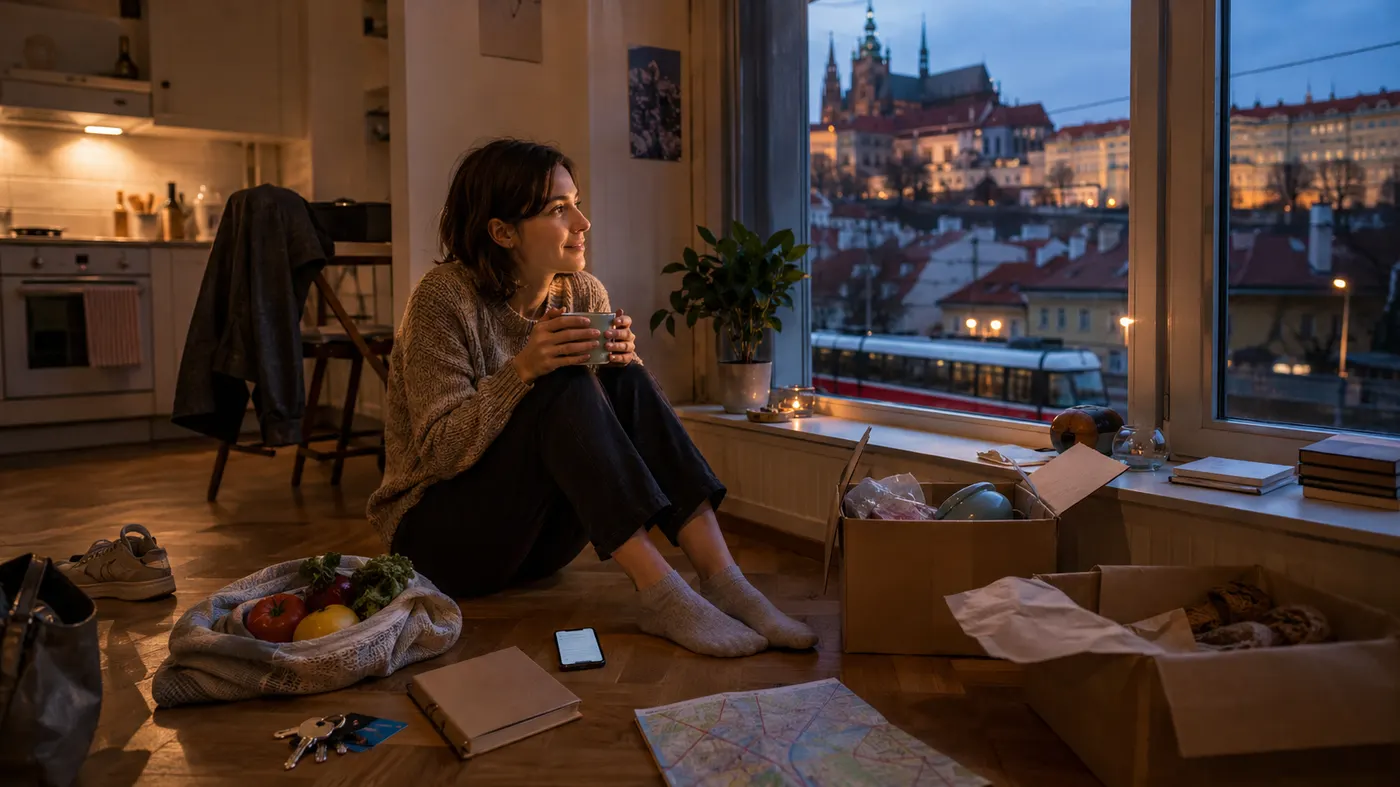
Before moving, many people see the Czech Republic through photos of Prague, short trips, stories from acquaintances, or videos on social media. But living in a country is different from a tourist impression.
Ordinary life includes work, tiredness, rent, bills, queues, documents, bad weather, language mistakes, and everyday issues. This does not mean the country is bad. It means that after moving, not a vacation begins, but normal daily life.
The sooner a person accepts this difference, the easier adaptation becomes. There is no need to expect constant excitement. Calm stability often starts to be appreciated later, when habits, familiar routes, understandable work, and a sense of control appear.
How to deal with loneliness after moving
Even with work and housing, a person may feel lonely. Especially if there is no family, friends, or familiar social circle nearby. This is a normal part of moving that people rarely talk about in advance.
It helps not to wait for new connections to appear by themselves. They need to be built gradually:
- communicate with colleagues, even briefly;
- attend language courses;
- look for local interest groups;
- do not close yourself off only in work;
- go for walks and explore the area;
- keep in touch with loved ones, but do not live only in the past;
- look for people who have already gone through a similar path.
You do not need to find close friends immediately. At the first stage, a few regular contacts are enough to avoid feeling completely isolated.
What helps you feel more confident faster
Confidence does not appear in one moment. It is built from small, understandable actions. Today a person bought a ticket by themselves. Tomorrow they understood a message from the apartment owner. A week later, they were able to explain a problem at work. A month later, they already know the area and are no longer afraid of a phone call in Czech.
Simple habits help a lot:
- learn 5–10 new words a day;
- save useful phrases on your phone;
- translate important documents immediately;
- prepare phrases before making a call;
- write down new words after work;
- do not be afraid to speak with mistakes;
- solve one postponed everyday issue once a week.
The main thing is not to try to adapt in one sudden leap. It is better to move gradually but regularly. Small steps bring more results than rare attempts to change everything at once.
Which mistakes make adaptation harder
Some mistakes significantly slow down getting used to life in the Czech Republic. They seem small, but over time they create a feeling of tiredness and helplessness.
- postponing Czech “for later”;
- communicating only in a closed circle in your native language;
- not reading documents before signing;
- not clarifying work and housing conditions;
- not calculating expenses;
- ignoring letters and official notifications;
- expecting everything to be like at home;
- comparing first difficulties with other people’s success stories;
- making important decisions in a state of panic.
Moving is almost always connected with stress. But many problems become smaller if they are solved one by one, instead of trying to control everything at the same time.
When the Czech Republic starts to feel familiar
Everyone has their own adaptation timeline. Some people get used to life in a few months, while others need a year or more. Usually, life becomes easier when three things appear: a clear income, stable housing, and basic language skills.
Gradually, a person stops being afraid of ordinary situations. It becomes clear how transport works, where groceries are cheaper, whom to call if there is a problem with the apartment, how to make a doctor’s appointment, and which documents must not be lost.
At this moment, the Czech Republic begins to feel not like a temporary place, but like a normal environment for life. Not perfect, not always simple, but understandable.
Conclusion
Adapting in the Czech Republic after moving is not one big step, but many small actions. You need to figure out housing, work, documents, transport, expenses, and the language. The more calmly a person builds their everyday life, the less stress there is in the first months.
Czech does not have to be known perfectly from the first day, but it should not be postponed for too long. Even basic phrases help you feel more confident, understand conditions better, and depend less on other people’s explanations.
The most effective approach is not to demand instant adaptation from yourself. It is enough to make life a little clearer every day: learn a few words, check one document, solve one everyday issue, save one useful contact. This is how a foreign country gradually becomes a place where you can live calmly.