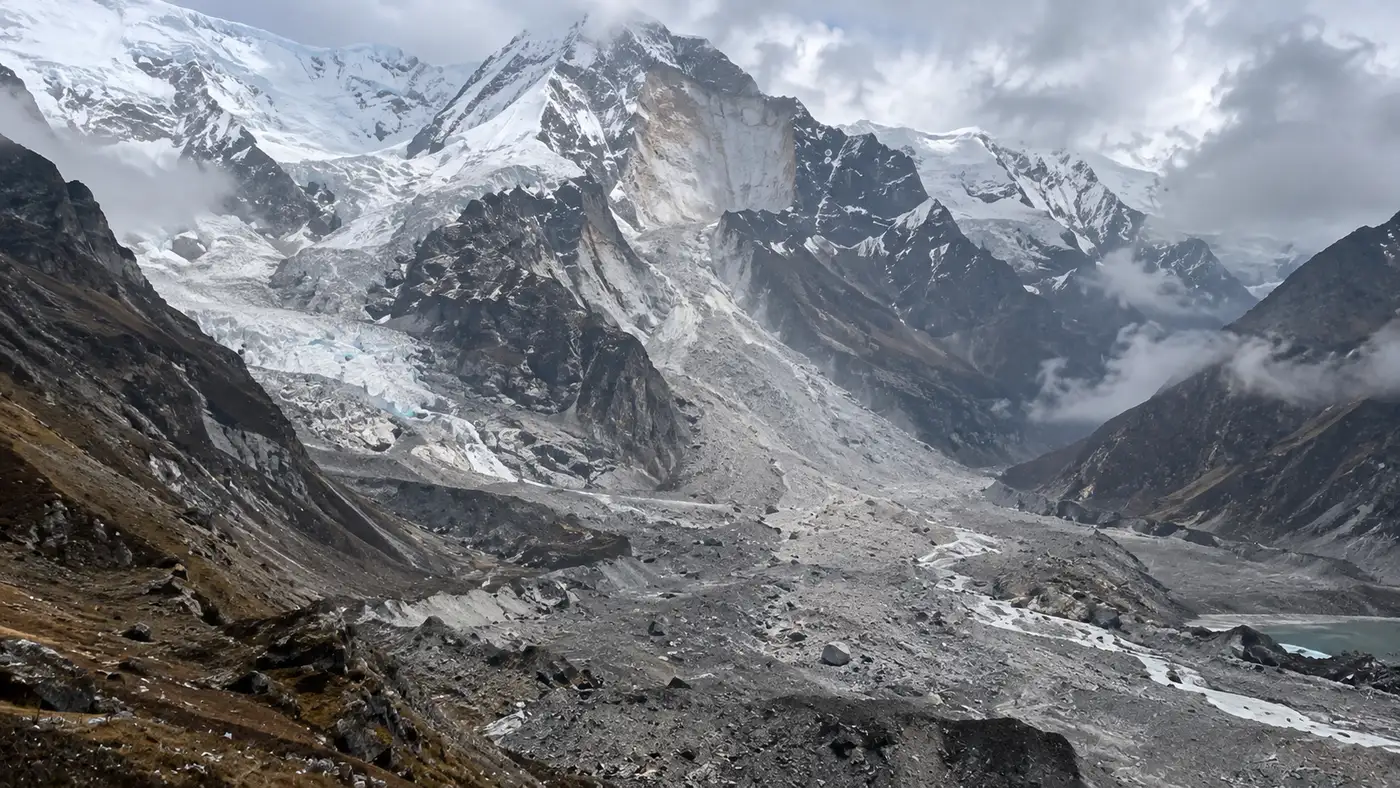
Climate Change Likely Helped Destabilize the Nepal Glacier Collapse, Scientists Say
Human-caused climate change likely helped create the conditions that destabilized the Himalayan slope behind Nepal's catastrophic August disaster, an international group of scientists has concluded. The event began as a massive rock and ice collapse before turning into an exceptionally fast debris flood.
The researchers are careful not to say climate change alone caused the collapse. Geology, past earthquakes, glacier retreat, permafrost degradation and unusually warm conditions may all have contributed.
The disaster began high in the Himalayas
According to a new World Weather Attribution analysis, roughly two square kilometres of rock wall and glacier ice collapsed on August 26 near the Nepal-China border.
The material fell about 1,400 metres before transforming into a rock-ice avalanche and then a destructive debris flood. Researchers estimate that the flow reached the Rasuwagadhi border area, 22 kilometres downstream, in only about seven minutes.
Warming is weakening high mountain terrain
The scientists found that glaciers in the region have been losing mass for decades. The retreat of the Langtang-Lirung glacier has accelerated since 2010, while warming is also degrading high-altitude permafrost that can help bind fractured rock together.
July and August immediately before the collapse were unusually warm. The researchers estimate human-caused climate change increased temperatures during those months by about 1.5°C compared with a pre-industrial climate.
Scientists stop short of blaming climate change alone
The study does not claim that the August collapse would have been impossible without global warming. Researchers say there is not yet enough evidence to directly attribute this individual rock-ice avalanche to climate change.
Instead, warming is described as a destabilizing factor acting on an already vulnerable mountain system. The event also exposed a difficult problem for Himalayan communities: a disaster moving this quickly can exceed the capabilities of conventional flood-warning systems, leaving extremely little time to evacuate.