AI helped uncover a “hidden” human protein involved in cell-to-cell exchange
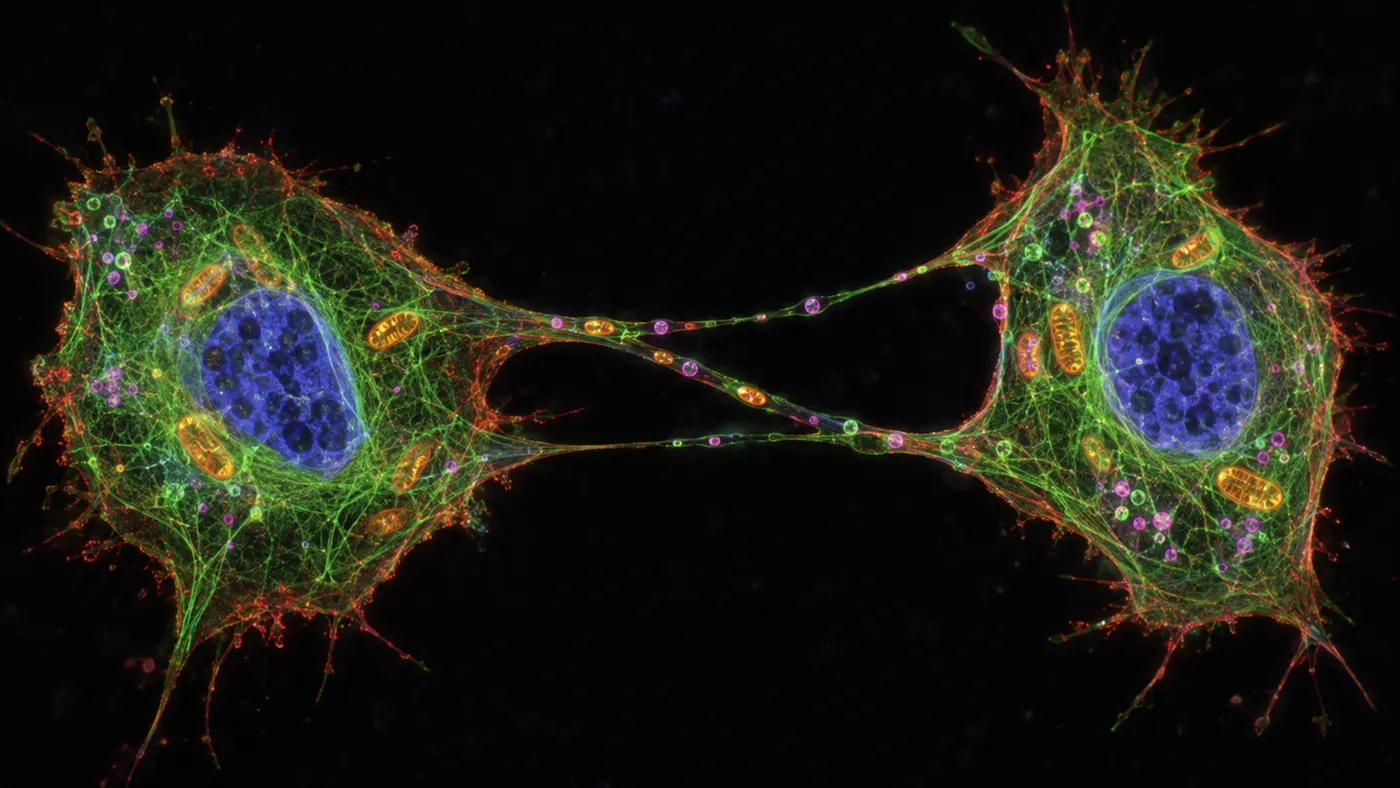
Scientists have used artificial intelligence to investigate poorly understood proteins in the human body and discovered an unexpected role for a protein called TM184C. The protein appears to help form microscopic connections through which neighboring cells can exchange materials and even cellular structures.
The research was published in Nature. The approach could help scientists uncover previously unknown mechanisms in human biology and improve understanding of diseases including cancer.
AI compared more than 214 million protein structures
Researchers at the University of Miami's Sylvester Comprehensive Cancer Center used AI to search for similarities between the three-dimensional shapes of proteins rather than simply comparing their genetic sequences.
The system analyzed more than 214 million predicted protein structures and identified poorly characterized proteins whose shapes resemble members of the GPCR receptor family.
What scientists discovered about TM184C
TM184C attracted particular attention. Experiments showed that the protein is associated with thin structures connecting neighboring cells.
- intracellular vesicles can travel through these cellular “bridges”;
- cells can exchange metabolites and organelles;
- even mitochondria can move between connected cells;
- TM184C is also linked to autophagy, the process cells use to recycle damaged components.
When researchers reduced TM184C levels, cells formed fewer of these connections, suggesting that the protein plays a direct role in organizing cell-to-cell exchange.
Why the discovery could matter for cancer research
This type of exchange may help cells survive stressful conditions. For tumor cells, which frequently experience shortages of oxygen and nutrients, such connections could potentially provide an additional survival mechanism.
The study published in Nature does not mean scientists have discovered a new cancer treatment. However, it demonstrates how AI analysis of three-dimensional protein structures can reveal biological mechanisms that may be difficult to find through traditional genetic-sequence comparisons.